

Trading automation has transformed how everyday people participate in financial markets. Gone are the days when you needed to sit glued to screens, analyzing charts for hours, or relying purely on gut feelings. Today, AI-powered trading bots can execute trades on your behalf, monitor markets 24/7, and make decisions based on data rather than emotion.
Before starting with beginner trading automation, you need three essentials: a clear financial goal, capital you can afford to invest, and basic market knowledge. Choose a reputable platform, understand risk management, and start small to build confidence.
For new traders, students, and first-time investors, the world of automated trading might seem intimidating. But with the right preparation and understanding, trading bots for newbies can become powerful tools for building wealth without the steep learning curve of manual trading. This guide walks you through everything you need to know before taking your first step.
Understanding What Trading Automation Really Means
Trading automation uses software algorithms—often powered by artificial intelligence—to analyze market conditions and execute trades automatically. Instead of manually placing buy and sell orders, you set parameters and let the bot work according to pre-programmed strategies or machine learning models.
Modern platforms like BluStar AI use deep-learning technology combined with real-time market analysis to make trading decisions. These systems can process vast amounts of data in milliseconds, identifying patterns and opportunities that would take humans hours to spot.
For beginners, this means you can participate in markets like forex, gold, and Bitcoin without needing years of experience or spending your entire day monitoring price movements. The bot handles the technical execution while you maintain control over your investment strategy and risk tolerance.
Essential Prerequisites Before You Start
Financial Foundation
Before diving into automated trading, assess your financial readiness:
- Emergency fund: Ensure you have 3-6 months of living expenses saved separately
- Debt management: High-interest debt should be addressed first
- Investment capital: Only use money you can afford to lose without impacting daily life
- Realistic expectations: Understand that all trading involves risk, and automation doesn’t guarantee profits
Starting with a small amount—even as little as $100-500—allows you to learn the system without significant financial stress.
Basic Market Knowledge
While trading bots handle execution, you still need fundamental understanding:
- Market types: Know the differences between forex, cryptocurrency, commodities, and stock markets
- Risk factors: Understand volatility, leverage, and how market conditions affect performance
- Trading terminology: Familiarize yourself with terms like stop-loss, take-profit, and position sizing
- Economic indicators: Learn which news events and data releases impact your chosen markets
You don’t need to become an expert analyst, but this foundation helps you make informed decisions about bot settings and risk parameters.
Technical Requirements
Ensure you have the practical tools in place:
- Stable internet connection for platform access
- Secure device (computer or smartphone) with updated security software
- Verified account with a reputable brokerage partner
- Basic understanding of how to navigate trading platforms and dashboards
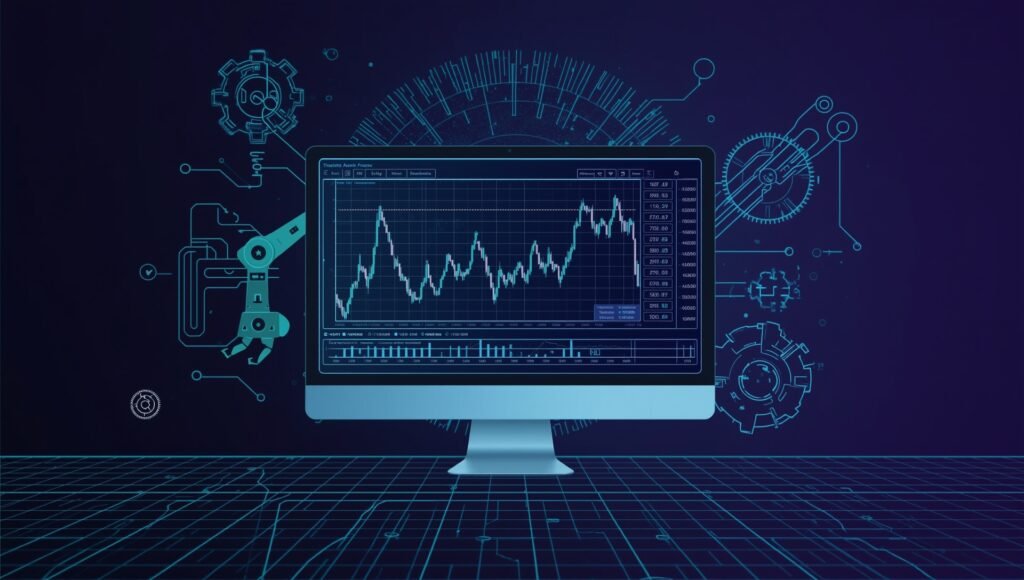
Choosing the Right Automated Trading Platform
Not all trading bots are created equal. When evaluating platforms, prioritize these factors:
| Factor | What to Look For |
|---|---|
| Transparency | Clear performance tracking and honest reporting of wins and losses |
| Fund Control | You maintain custody through trusted brokers, not the platform |
| Technology | AI-driven analysis with adaptive algorithms that respond to market changes |
| Support | Educational resources and responsive customer service for beginners |
| Flexibility | Ability to start, pause, or stop trading at any time |
Platforms that specialize in beginner-friendly automation, such as BluStar AI, offer intuitive dashboards that make complex algorithmic trading accessible without overwhelming new users with unnecessary technical details.
Setting Up Your Risk Management Strategy
Risk management is the most critical skill for any trader, especially beginners using automation. Before activating any trading bot:
Determine your risk tolerance: Decide what percentage of your capital you’re comfortable risking per trade (typically 1-3% for conservative approaches).
Set clear boundaries: Establish maximum daily or weekly loss limits. Most quality platforms allow you to configure these parameters directly.
Diversify intelligently: Don’t put all your capital into one market or strategy. Consider spreading investments across different bots or asset classes.
Use stop-losses: Ensure your automated system includes stop-loss mechanisms to limit potential losses on individual trades.
Monitor regularly: Even with automation, check your account periodically to ensure the bot performs as expected and market conditions haven’t drastically changed.
Common Mistakes to Avoid
New traders often stumble in predictable ways. Avoid these pitfalls:
- Over-leveraging: Using too much borrowed money amplifies both gains and losses
- Chasing losses: Increasing position sizes after losses to “make it back quickly”
- Ignoring education: Relying entirely on automation without understanding basic principles
- Unrealistic expectations: Believing automation guarantees consistent profits
- Platform hopping: Switching systems too quickly without giving strategies time to work
- Emotional interference: Manually overriding the bot based on fear or excitement
Remember that trading automation removes emotion from execution, but you must also keep emotions out of your oversight decisions.
Your First Steps Forward
Once you’ve completed the preparation, follow this beginner-friendly approach:
- Start with a demo account if available to understand how the platform works without real money
- Begin with minimal capital to test your comfort level and the bot’s performance
- Choose one market initially rather than spreading attention across multiple asset classes
- Document your journey by keeping a simple log of settings, performance, and lessons learned
- Commit to learning by dedicating time each week to understanding market fundamentals
- Gradually scale up only after demonstrating consistent comfort and reasonable results
Trading automation for beginners isn’t about getting rich quickly—it’s about building sustainable, data-driven investment habits that grow with your knowledge and confidence. The technology handles the complex execution, but your preparation, discipline, and ongoing education determine long-term success.
By ensuring you have the right financial foundation, basic market knowledge, and a solid risk management strategy before you start, you position yourself to use trading bots effectively as tools for financial empowerment rather than sources of stress or loss.
Risk Disclosure:
Trading involves significant risk and may result in the loss of your invested capital. Past performance does not guarantee future results. This trading system and its developers do not provide financial advice or guarantee profits. Automated trading may be affected by market volatility, technical errors, or system failures. Users assume full responsibility for all trading decisions and outcomes. Always trade responsibly and only with funds you can afford to lose.